
Hospital stays can be stressful for children. Interactive books offer a helpful distraction during treatments, waiting periods, or quiet moments in a patient’s room. They provide opportunities for play while also supporting developmental skills such as language, counting, fine motor skills, and problem-solving.
Another practical advantage is durability. Many of the most popular books on the unit are board books, which can be wiped down and sanitized more easily than traditional paper books. In a healthcare setting where infection control is important, this makes them especially useful.
One series that is consistently in demand is the Poke-a-Dot! collection by Melissa & Doug. These books feature raised buttons that children can “pop” as they read along, creating a satisfying sensory experience.
Some of the titles I frequently see include:
These books are excellent for introducing counting, letters, vocabulary, and early literacy skills. The popping feature keeps little hands busy and often holds a child’s attention much longer than a traditional storybook.
Another group of favorites comes from Phoenix International (PI) Kids, which publishes books with built-in sound buttons. These books allow children to press buttons that play songs, character voices, or sound effects while reading.
Several examples from the unit include:
Children are often immediately drawn to these books because they recognize beloved characters such as Anna, Elsa, Elmo, and Peppa Pig. Familiar faces can provide a sense of comfort during a hospital stay, and the interactive sounds make story time feel more like play.
Perhaps one of the most useful books in the hospital setting is the First Look and Find series.
Popular titles on the shelf include:
These books encourage children to search for hidden objects within colorful scenes. While they may seem simple, they are incredibly effective at redirecting a child’s attention during procedures or treatments. Child Life Specialists often use them as a distraction tool, helping children focus on finding objects rather than worrying about what’s happening around them.
These books also encourage observation skills, vocabulary development, and parent-child interaction, making them a versatile resource for patients of many ages.
Mixed among the newer, interactive titles are a few books that many older volunteers and parents remember from their own childhoods.
One standout is The Day the Crayons Quit written by Drew Daywalt and illustrated by Oliver Jeffers. This imaginative story gives each crayon its own personality and voice, creating a humorous tale that appeals to both children and adults. It’s one of those rare picture books that remains entertaining no matter how many times it’s read.
Another familiar title on the shelf is The Pigeon Loves Things That Go! by Mo Willems. The beloved Pigeon character has been making children laugh for years, and his expressive personality continues to captivate young readers.
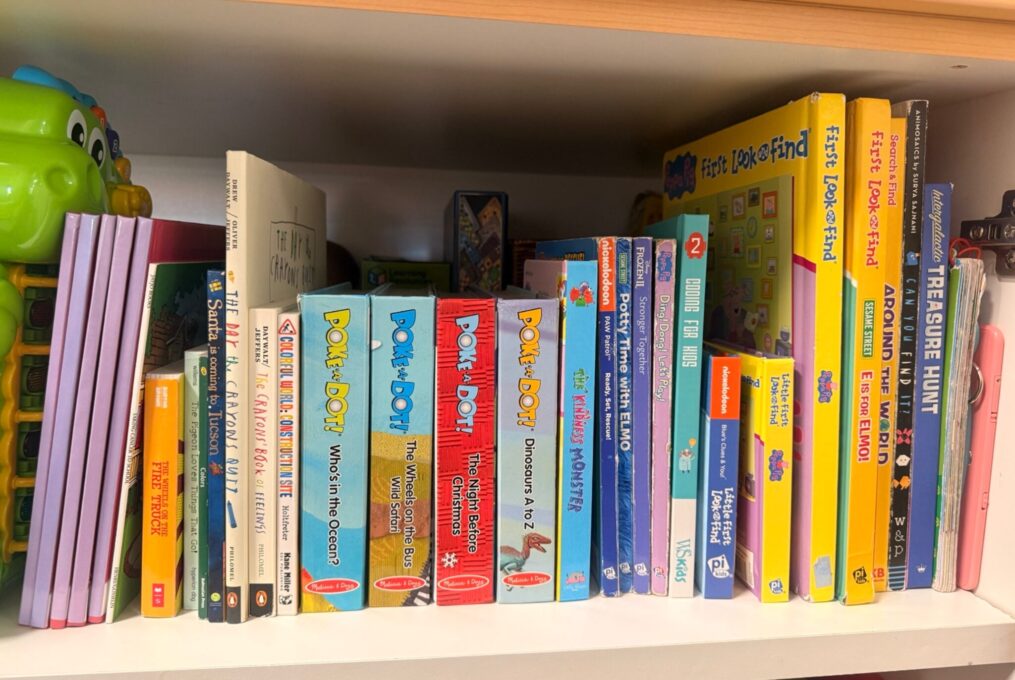
What stands out most about this collection is that every title serves multiple purposes. They entertain, educate, distract, comfort, and encourage interaction. In a pediatric hospital environment, where even small moments of joy can have a meaningful impact, these books become much more than stories on a shelf. Whether it’s a toddler eagerly popping every button in a Poke-a-Dot! book, a preschooler singing along with Elsa, or a child searching for hidden objects in a Look and Find adventure during a treatment, these books help transform ordinary moments into opportunities for play and connection.
Vanshikha Vij, Pine Reads Review Writer