
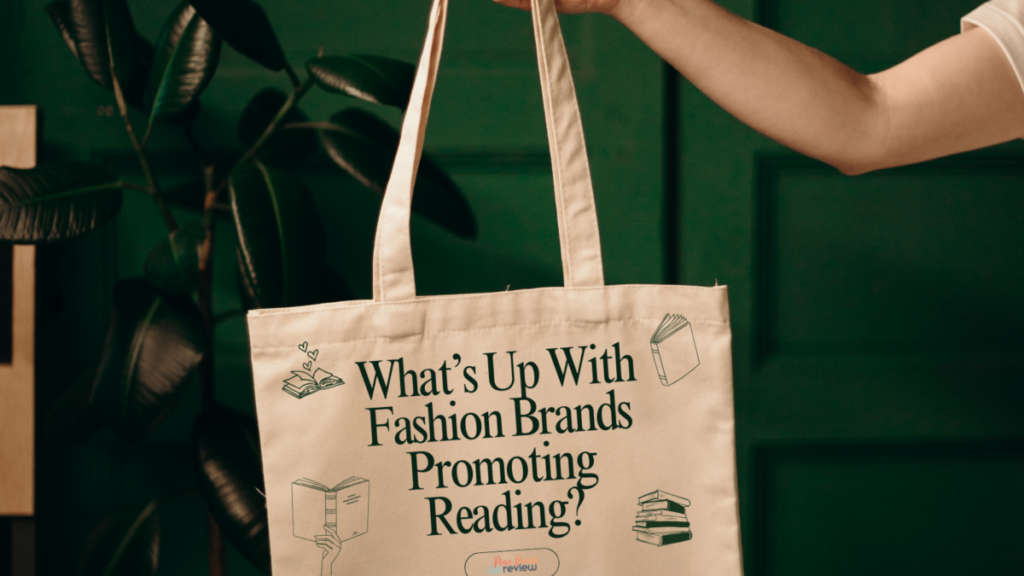
Let’s start with the obvious answer: reading has become an aesthetic. Reading is, frankly, cool again. BookTok, Bookstagram, and YouTube have transformed reading from what was once considered a solitary hobby into something highly social. People aren’t just discussing books—they’re photographing them, annotating them, decorating shelves, carrying them to coffee shops, and building entire online identities around them.
Books have become part of personal style. A tote bag with a novel sticking out of it says something about you in the same way a handbag or a pair of shoes does. Fashion brands are very good at recognizing cultural shifts, and they’ve realized that readers are no longer a niche audience—we’re consumers with a recognizable aesthetic.
But I don’t think that’s the whole story. As easy as it would be to dismiss all of this as marketing, I don’t think that’s entirely fair. We’re also living through an era where conversations about literacy are impossible to ignore. Teachers are sounding the alarm. Publishers are talking about declining reading habits. Libraries are fighting for funding. And every few months another article appears discussing literacy, shortened attention spans, endless scrolling, or whether people still read for pleasure. Whether every statistic tells the same story is another conversation entirely. But culturally, there’s a growing sense that reading is becoming less common—or at least more difficult to prioritize.
In today’s environment, books have taken on a different kind of cultural value. Reading isn’t just entertainment anymore. It’s become something people aspire to make time for. Books signal something beyond intelligence—they’re acting as a status symbol. One thing I’ve found interesting is that these campaigns rarely focus on what people are reading. Instead, they celebrate the act of reading itself. A book has become shorthand for curiosity. For intentionality. For choosing something other than another hour of scrolling on our phones.
Whether or not that’s always true doesn’t really matter. Fashion has never been about literal truth—it’s about symbolism. Just as glasses have long been associated with intelligence and tote bags with sustainability, books now communicate a certain lifestyle. And luxury brands sell lifestyles better than almost anyone.
Is reading becoming a trend? Maybe. But I hope not. Trends come and go. Reading and literacy shouldn’t.
If someone starts reading because they saw a beautiful campaign, bought a cute book charm, or wanted to participate in a BookTok trend, I honestly don’t think that’s a bad thing (check out my blog on BookTok here for more on this conversation). Very few lifelong readers start because someone handed them a classic like War and Peace and told them it was good for them. Sometimes people discover hobbies because they’re aesthetically appealing first. The important part is whether they stick around after the novelty wears off. Or is this a response to something bigger? I think it’s both.
Fashion brands are absolutely capitalizing on the current popularity of reading online. That much is clear by the speed at which items from these campaigns have sold out. But I also think they’re responding to a broader cultural conversation—one where books increasingly represent something we’ve started to feel we’re losing: attention, focus, curiosity, and patience are some of the first traits to come to mind.
Whether we’re actually in the middle of a literacy crisis or simply becoming more aware of one, books have become symbolic in a way they haven’t been for a long time. Maybe that’s why we’re seeing them everywhere—from coffee shops to TikTok to luxury brands. Maybe fashion isn’t trying to make us readers. Maybe it’s recognizing that, in an age of constant notifications and scrolling, being seen as someone who reads has become aspirational again.
If a Coach book charm gets someone to walk into a bookstore, or a Dior bag reminds someone of the stories they loved as a kid, that’s not the worst outcome. Fashion has always reflected the culture around it. If books are becoming part of that conversation again, I think that’s something worth paying attention to. After all, there are certainly worse trends than reading.
Vanshikha Vij, Pine Reads Review Writer