

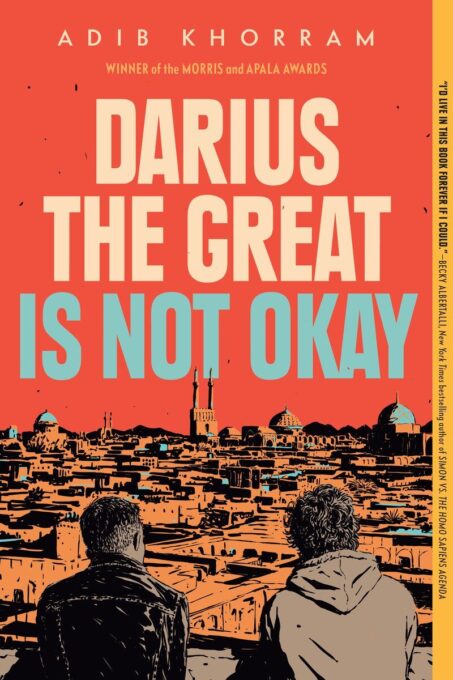
Darius Kellner doesn’t quite fit in. He’s half Iranian on his mother’s side, but can’t speak enough Farsi to communicate with his relatives; he’s half white on his father’s side, but Darius’ father always disapproves of him; and the popular kids at school bully him for his geeky interests. But when his grandfather becomes ill, Darius travels with his family to Iran, visiting his ancestral home for the very first time. Despite struggling to learn the culture and navigate relationships with his relatives, everything changes when Darius meets Sohrab, the boy next door. With Sohrab’s loyal friendship, Darius is able to explore his Persian identity and feel more like himself. But when Darius’ family needs to return home, he’ll have to learn how to straddle both worlds, loving who he is in each.
In Darius the Great Is Not Okay, Darius deals with depression and low self-esteem, and this impacts every aspect of his life. Because of this, the book seems like such a heartfelt depiction of a young adult moving through the world—perfect for readers also experiencing their own mental health journeys. What’s more, this book is part of a series, allowing readers to see how Darius further grows into his identity over time.

One chance meeting at the top of the school’s bell tower changes everything for teens Theodore Finch and Violent Markey. Both of them are in a dark place. Violet, once a popular and creative girl, is grieving the recent loss of her sister. Self-destructive Theodore has a morbid curiosity with death, and this makes him the infamous “freak” at school. But after Finch talks Violet off the ledge, he decides to choose her as his partner for their class project: find the “natural wonders” of Indiana. Going on this adventure allows the two of them to grow closer together, finding solace in each other as they fall more in love. But when tragedy strikes, it will take the strength of hope for these characters to heal from the loss.
In all honesty, this book is a heartbreaking read, particularly because it deals with topics like suicide, bipolar disorder, and depression. However, All the Bright Places is also filled with so much love and beauty that the boxes of tissue will be worth it. While I’ve never watched it, there’s also a film adaptation of this book that has a star-studded cast!

Melati Ahmad is an average, Beatles-loving 16-year-old girl in the 60s, except that she believes a djinn lives inside her body. This djinn haunts her with images of her loved ones dying, and if she doesn’t appease it by counting in threes, Melati believes these things will come to pass. Her nightmares soon become a reality when the race riots of Kuala Lumpur, Malaysia separate her from her mother. As the war rages around her, Melati teams up with Vince, the nephew of the Chinese-Malaysian stranger who saved her, to navigate through the city, helping victims along the way. But if she ever hopes to find her mother again, she will have to embrace her inner courage and confront her djinn.
In The Weight of Our Sky, Melati has OCD and anxiety, which triggers the compulsive behaviors associated with the djinn she believes is inside her. And with the dangerous backdrop of the conflict, one that illustrates a timely, nuanced portrayal of racial tensions, Melati’s narrative is filled with an abundance of sincere emotion. If you’re looking for an empowering historical fiction book, this is the right choice.
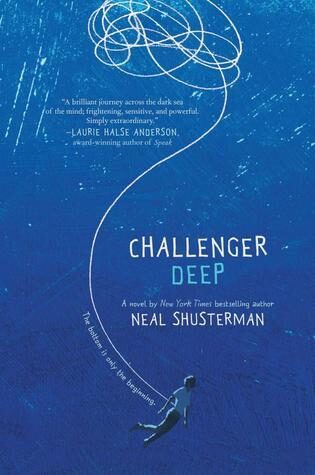
15-year-old Caden Bosch is torn between two different lives. One where he’s the artist of a pirate ship who illustrates parts of their journey to find the bottom of Challenger Deep and manages the growing tensions onboard. The other where he’s a freshman in high school who’s gradually descending into schizophrenia and the fantastical thoughts in his head.
Shusterman portrays mental illness in a way that doesn’t glamorize, demonize, or water it down; instead, he portrays Caden’s life with unflinching honesty and compassion. Having had his own son manifest a schizoaffective disorder, this author’s depiction of this reality is exceedingly raw, skillfully drawing readers into Caden’s head. In this way, I think this book is important for everyone to read, giving them a better understanding of individuals with this condition and what experiencing it can look like.
This is just a drop in the ocean of YA literature that explores mental health, so I encourage you to explore past this list and take the time to learn more about this subject. Understanding those around you is crucial because, chances are, the people in your life are dealing with their own mental illnesses, or maybe you are yourself and want to feel recognized in literature. In whichever case, these recommendations are also here for you to enjoy, and I hope you check one out!
Danielle Hartshorn, Pine Reads Review Writer & Editor